Coin vs Token: What's the Difference
02 November 2026 | Author: ABF Swap Research Team
A crypto coin is the native asset of its own blockchain, such as BTC on Bitcoin or ETH on Ethereum, and it is used to pay that network's transaction fees. A token is an asset created on top of an existing blockchain by a smart contract, such as USDT or LINK on Ethereum. The difference between coin and token is therefore about where an asset lives and what powers it, not about its price, size or popularity.
Key takeaways
- Coins are built into a blockchain's protocol; tokens are issued by smart contracts on someone else's blockchain.
- Sending a token usually requires a small amount of the host network's coin to pay the fee.
- The same asset can exist as a token on several networks, so choosing the right network matters.
- Almost all widely used stablecoins, including USDT and USDC, are tokens.
- "Coin" and "token" are technical terms. Regulators classify crypto-assets by their function, using categories such as utility tokens and e-money tokens.
Risk notice:
What Is a Crypto Coin?
A coin is created by the blockchain itself. New BTC are issued as rewards to miners under the Bitcoin protocol, and ETH is used to pay for every operation on Ethereum and to reward the validators who secure it. The crypto coin meaning is therefore tied to a network: the coin pays transaction fees, rewards the people who keep the network running, and serves as its basic unit of account. If the blockchain did not exist, the coin would not exist either.
Each major blockchain has its own coin: BTC on Bitcoin, ETH on Ethereum, SOL on Solana, BNB on BNB Smart Chain and TRX on Tron. Because the coin is part of the protocol, changing how it works, for example its supply schedule, requires a change to the network's rules that node operators must accept.
What Is a Crypto Token?
A token is created by deploying a smart contract, a program stored on a blockchain, that keeps a record of balances and defines how they can be transferred. Most tokens follow a shared technical standard, such as ERC-20 on Ethereum, BEP-20 on BNB Smart Chain or TRC-20 on Tron, so wallets and exchanges can support them without custom work. Launching a token does not require building a new network, which is why there are far more tokens than coins.
In practice, the crypto token meaning is broad. Some tokens represent a claim on another asset, such as stablecoins backed by cash reserves or "wrapped" versions of other coins, like Wrapped Bitcoin (WBTC) on Ethereum. Others give access to a product, a vote in a protocol or a share in the fees it earns. Every token is identified by its contract address, which is more reliable than its name or ticker, because anyone can create a token called "USDT". If a token you have received does not show up in your crypto wallet, you may need to add it manually using the official contract address.
Important:
What Is a Utility Token?
A utility token gives holders access to a product or service, or a role in how it is run. Under the EU's Markets in Crypto-Assets Regulation (MiCA), a utility token is defined as a crypto-asset that is "only intended to provide access to a good or a service supplied by its issuer".
In everyday use, the term covers a wider range of functions:
- Paying for a service: Chainlink's LINK token is used to pay node operators for supplying data, such as price feeds, to smart contracts.
- Fee discounts: some exchanges let customers pay trading fees in their own token at a reduced rate.
- Governance: holders of UNI, the token of the Uniswap protocol, can vote on proposals that change how the protocol works.
- Access: some platforms require users to hold or spend a token to unlock features or services.
Unlike a coin, a utility token does not secure its own blockchain. Its rules are set by the smart contract that issued it, and its usefulness depends on demand for the product behind it.
Key Differences Between Coins and Tokens
The main coin and token differences are summarised below.
| Coin | Token | |
|---|---|---|
| Blockchain | Has its own | Runs on another network's blockchain |
| How it is created | Built into the protocol, for example as mining or staking rewards | Issued by a smart contract under a standard such as ERC-20 |
| Network fees | Used to pay them | Usually needs the host network's coin to pay them |
| Who can create one | Only the developers and community of a blockchain | Anyone able to deploy a smart contract |
| How it is identified | By its network | By its contract address on a specific network |
| Typical role | Securing and running a network, storing value | Stablecoins, utility, governance, wrapped assets |
| Examples | BTC, ETH, SOL, BNB, TRX | USDT, USDC, LINK, UNI, WBTC |
The line is not always permanent. Several projects launched as tokens and later moved to their own blockchain, turning the token into a coin: BNB, for example, started as an ERC-20 token on Ethereum in 2017 and was migrated to Binance's own chain in 2019. Ether, on the other hand, is a coin that is often wrapped as an ERC-20 token (WETH) so it can be used in applications built for tokens.
How Regulators Classify Coins and Tokens
The crypto token vs coin distinction is technical. Regulators look instead at what an asset does and what rights it gives. In the EU, MiCA separates e-money tokens, which reference a single official currency, asset-referenced tokens, which reference other assets or a basket of them, utility tokens and other crypto-assets.
In the UK, the FCA's 2019 guidance groups cryptoassets into exchange tokens such as Bitcoin, security tokens, e-money tokens and utility tokens. In these frameworks, a "token" can include assets that are technically coins.
Are Stablecoins Coins or Tokens?
Almost all stablecoins in common use are tokens. USDT, USDC and DAI are issued through smart contracts on networks such as Ethereum, Tron and Solana, and the same stablecoin often exists on many networks at once. USDT on Ethereum and USDT on Tron are separate token contracts, and sending between them requires a bridge or an exchange.
There are exceptions. Some issuers now run their own blockchains: Circle's Arc network, which opened to the public in September 2026, uses USDC to pay transaction fees, so on that network USDC plays the role normally filled by a coin. For a closer look at how stablecoins keep their value and how they are regulated, see our explainer on what are stablecoins.
In the EU, a stablecoin pegged to a single currency is an e-money token under MiCA, and only tokens from authorised issuers can be offered by regulated crypto-asset service providers. Before relying on a particular stablecoin, check its current status in the ESMA register.
Does the Difference Matter When You Trade?
For the trade itself, price and liquidity matter more than whether an asset is a coin or a token. The difference becomes important when you move assets:
- Network choice: many tokens exist on several networks. A deposit address on one network will not receive tokens sent on another, so the sender and the recipient must use the same one.
- Fees: each network charges its own fee, paid in its own coin. The same USDT transfer can cost very different amounts on Ethereum and on Tron.
- Wallet support: your crypto wallet has to support both the asset and the network, and a token may not appear until you add its contract address.
- Fake tokens: scammers create tokens with the same names and tickers as well-known ones. Always check the contract address against the issuer's official website.
When you exchange crypto to fiat, the platform will only credit deposits that arrive on a network it supports for that asset, so check the supported networks on the deposit page before sending.
FAQ
Is Bitcoin a coin or a token?
Bitcoin is a coin. BTC is the native asset of the Bitcoin blockchain: it is created through mining and used to pay transaction fees on that network. A "wrapped" version of Bitcoin, such as WBTC on Ethereum, is a token that represents BTC held in reserve, but it is not Bitcoin itself.
Can a token become a coin?
Yes. Some projects start as tokens on an existing blockchain and later launch their own network, swapping the old tokens for new native coins. BNB, for example, began as an ERC-20 token on Ethereum in 2017 and migrated to Binance's own blockchain in 2019. Most tokens, however, never take this step.
What is a utility token used for?
A utility token gives access to a product or service or a role in running it. Common uses include paying for a service, such as LINK for Chainlink data feeds, receiving discounts on platform fees and voting on protocol changes, as UNI holders do for Uniswap. Its usefulness depends on demand for the product behind it.
Are stablecoins coins or tokens?
The major stablecoins, including USDT, USDC and DAI, are tokens issued by smart contracts on existing blockchains, often on several networks at once. A few issuers now run their own networks where a stablecoin pays transaction fees, as USDC does on Circle's Arc, but for most users stablecoins are tokens.
Does it matter whether an asset is a coin or a token when trading?
For the price you get, not much: liquidity and fees matter more. It does matter when you move assets. Tokens need the host network's coin for fees, can exist on several networks and must be sent on the network the recipient supports. Getting the network wrong is one of the most common causes of lost or delayed transfers.
Sources
Disclaimer
This article is for general educational purposes and does not constitute financial, investment, legal or tax advice. Cryptoassets are high-risk, their value can fall to zero, and transfers are generally irreversible. In the UK, cryptoassets are generally not protected by the FSCS, and you may not be able to complain to the Financial Ombudsman Service; in the EU, they are not covered by deposit guarantee schemes. Rules on cryptoasset services differ by country, so check whether any provider you use is authorised to serve customers where you live.
Related News

Crypto Exchange and Withdrawal Fees Explained
Read more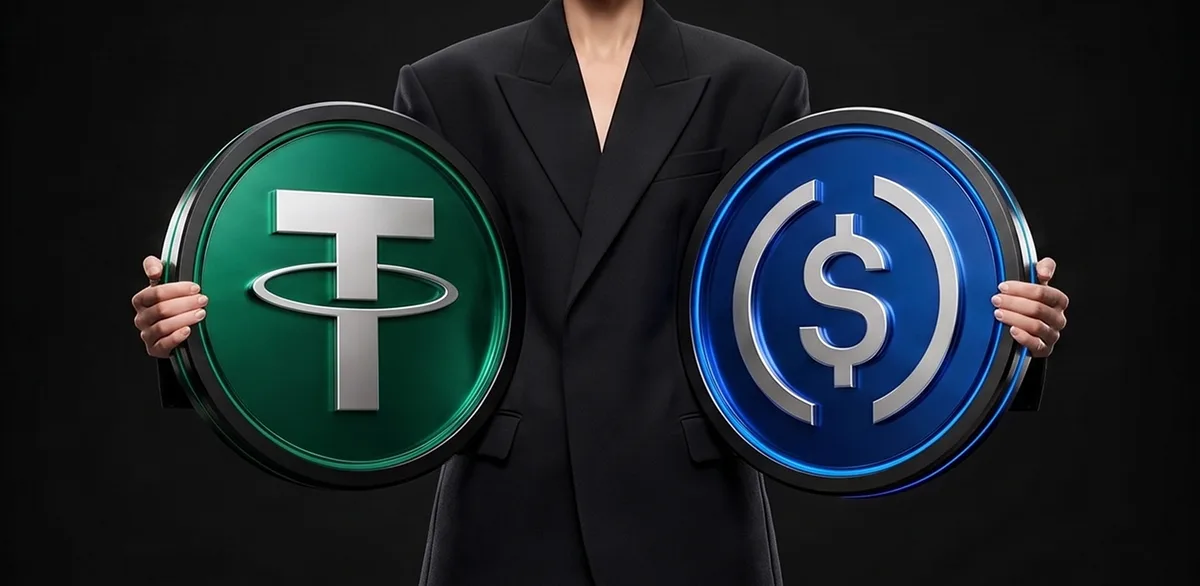
What Are Stablecoins: How USDT and USDC Work
Read more
What Is a Trading Pair in Crypto Trading?
Read more
Common Crypto-Selling Mistakes Investors Keep Repeating
Read more
How to Use a Crypto Exchange Safely: 2FA, Phishing, Address Checks
Read moreA secure wallet for all your digital assets
Start earning passive income from every transaction your invitees make with one of the highest rewards on the market!